
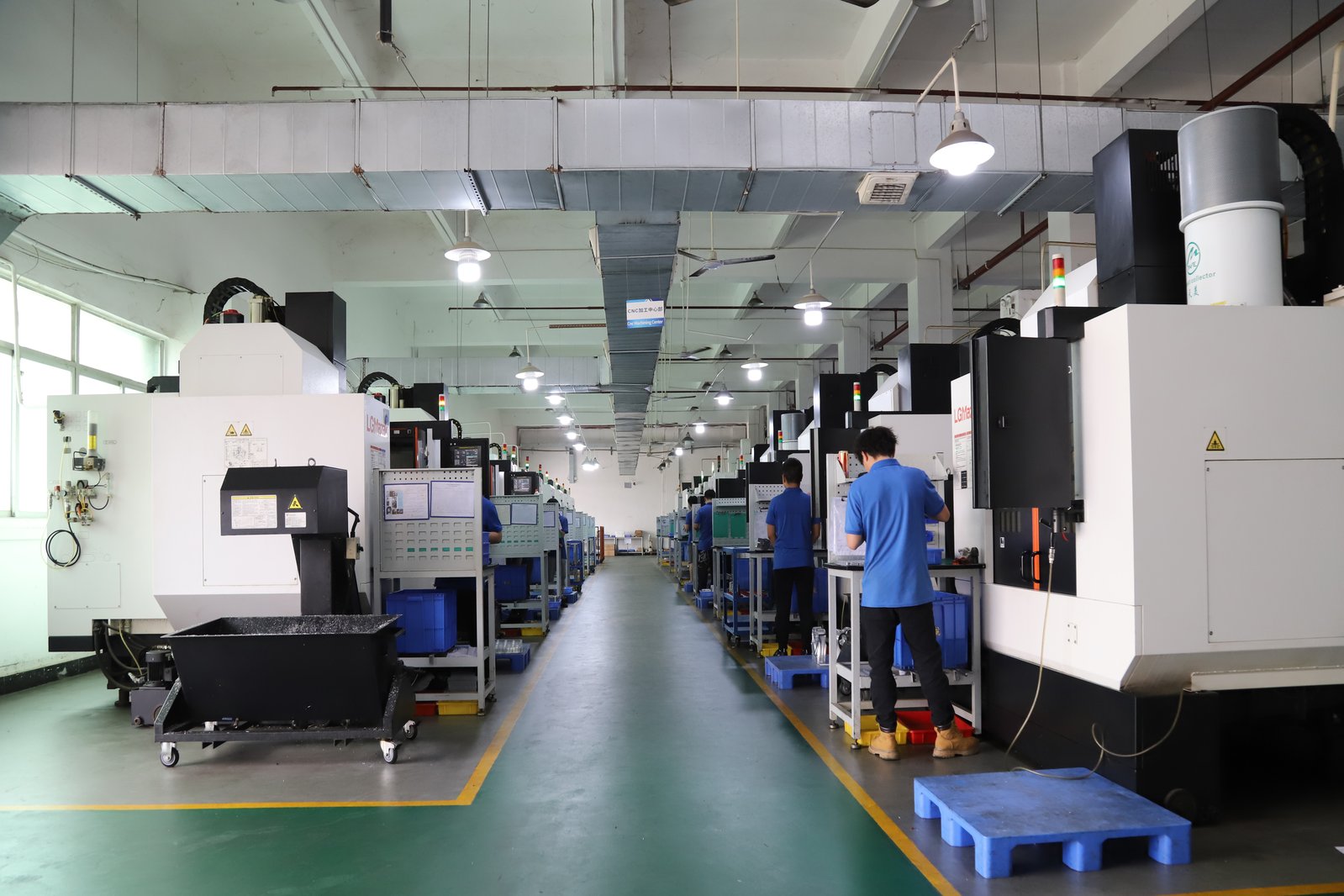
Aluminum and stainless steel cover the great majority of machined parts bought from China, and most of the confusion between them is not about the metals — it is about asking the wrong question. "Which is better?" has no answer; "what does this part have to survive?" has one. Weight, corrosion, strength, temperature, finish, and cost each point in a direction, and the grade within each family matters as much as the family itself. This article gives the decision framework a buyer can run against a drawing before the RFQ goes out.
1. Which functional requirements separate aluminum from stainless from the start?
Start with the environment and the load. Aluminum earns its place when weight is a design variable — for a moving assembly, a hand-held product, or a part the operator lifts — because it is roughly a third of the density of stainless with useful strength. Stainless earns its place when the part faces corrosion, heat, or wear that aluminum cannot take, or when the design needs high strength in a compact section. Run those two questions first and the family usually picks itself.
Conductivity is a third axis that is often forgotten. Aluminum conducts heat and electricity well, which makes it the natural choice for heat sinks, enclosures that dissipate heat, and electrical hardware. Stainless is a poor conductor by comparison. If the part must move heat or current, aluminum wins on physics, not on preference, and the drawing should say so explicitly so the shop does not "helpfully" quote a substitute.
2. How do the grades within each family change the choice?
Picking the family is only half the decision. Within aluminum, 6061-T6 is the default structural grade — good strength, excellent machinability, easy anodizing — and 7075-T6 is the high-strength option for weight-loaded parts, traded off against slightly harder cutting and more care with thin walls. Within stainless, 303 is the free-machining choice for small, high-volume parts; 304 is the general corrosion-resistant workhorse; 316L adds molybdenum for salt and chemical exposure; and 17-4PH is the precipitation-hardening grade that reaches very high strength after heat treatment.
The grade callout belongs on the drawing for a reason: the certificate can only prove what was written. "Stainless steel" on a drawing is an invitation for a shop to buy the cheapest 304 it can find, or to substitute a grade with different corrosion behavior. Name 316L or 17-4PH H1025 explicitly when that is what the design needs, and name 6061-T6 or 7075-T6 the same way — the extra words cost nothing and the wrong grade can cost the whole program.
Watch for the second-tier alloys on quotes. If a shop offers 6063 where you drew 6061, or 303 where you named 304, ask why — sometimes it is a legitimate stocking improvement for a non-critical part, and sometimes it is a quiet substitution to save money. On a drawing with a named grade, any change needs your written approval, whatever the reason, and the certificate should name exactly what was machined.
3. What does strength-to-weight versus corrosion resistance actually decide?
Strength-to-weight is aluminum's home turf. A 6061-T6 bracket is strong enough for most structural roles at a third of the weight of an equivalent stainless part, and where the loads climb, 7075-T6 closes much of the strength gap while keeping the weight advantage. Stainless answers with absolute strength and stiffness: 304 is roughly twice the density of aluminum and several times stiffer, so a stainless part can be thinner for the same rigidity, which matters when the envelope is tight and the weight is not the constraint.
Corrosion resistance is where the family table turns. Bare aluminum forms a self-protecting oxide but is attacked by chlorides and many chemicals; stainless 304 and especially 316L shrug off the environments that pit aluminum. For a marine fitting, a chemical-exposed bracket, or a food-contact part, stainless is not a premium — it is the minimum viable material. Run the corrosion question before the strength question, because a part that corrodes has failed regardless of how strong it was.
Fastening is a practical tiebreaker. A stainless part can carry a high-strength thread cut directly into the metal, while an aluminum part of small section often needs a thread-forming insert to survive repeated assembly — an extra part and an extra step. If the design relies on frequent disassembly, high torque, or heavy thread load, the family choice affects the fastener design as much as the material cost, and the drawing should reflect it.
4. When does stainless actually cost more, and where does the money go?
Stainless costs more on both sides of the quote. The stock itself is pricier per kilogram, and the cutting is slower — the 300 series work-hardens, so it demands rigid setups, sharp tooling, and steady feeds, which pushes cycle times up and tool life down. Aluminum cuts fast, chips cleanly, and holds a finish with light passes. For the same geometry, the stainless version prices higher, and the gap is widest on small, detailed parts where the material cost difference is compounded by slower machining.
The cost comparison only turns fair when you price the whole design. A stainless part may be thinner for the same stiffness, so it uses less material and less machine time than a chunky aluminum part would. An aluminum design may need an oversized boss or a threaded insert to survive repeated assembly, adding parts and steps. Compare finished designs, not bar prices, and remember the tolerance envelope applies equally to both: milling and turning hold ±0.003 mm and precision grinding ±0.002 mm in either family, with Ppk ≥ 1.67 at the initial study on critical characteristics and Cpk ≥ 1.33 on general characteristics. Capability is reported per characteristic: every report names the feature, its tolerance band, the sample size, the sigma method, and the study window.
For a first build or a design still changing, aluminum is often the faster path even when production may later run in stainless: it machines quicker, iterates cheaper, and validates the geometry before the slower, costlier stainless program starts. Machine the functional prototype in the final grade when the tests involve corrosion or strength; otherwise let aluminum absorb the iteration cycles and reserve the stainless spend for the frozen design.
5. Which finishing and surface treatments suit each family?
Finishing is where the two families diverge most visibly. Aluminum's signature finish is anodizing, which grows a hard oxide layer into the surface, accepts dye for color, and in its hard-coat form adds real wear resistance. Stainless does not anodize; its protection comes from passivation, which restores the chromium-oxide film disturbed by machining, or electropolishing, which smooths and cleans the surface. Plating exists for both but is more common on stainless and steel parts.
The finish choice should follow the application, not decoration. Anodize where the part needs color, mild wear resistance, or a controlled cosmetic surface; hard-coat where it will slide against another part; passivate or electropolish stainless where corrosion resistance or cleanability is the point. Specify the finish by name and class on the drawing, and confirm the shop measures dimensions before and after finishing, because anodize grows the surface and plating adds to it.
6. How do machinability and tooling differ between the two families?
Machinability is where the price gap originates. Aluminum is among the most machinable metals: high speeds, predictable chips, long tool life, and forgiving behavior make it the easiest way to test a design and the cheapest way to run it. Stainless is the opposite end of the spectrum — 304 and 316L work-harden at the cut, so dwell or rubbing hardens the surface and wears the tool, and the shop must run rigid setups with sharp inserts and consistent feed to avoid a work-hardened surface that ruins the next pass.
For the buyer, machinability shows up as cycle time, tooling cost, and the finish you can expect. A stainless part with fine detail will run slower and cost more per part than the same part in 6061, and that is a property of the material, not a fault of the supplier. When you compare quotes across the two families, expect the stainless quote to be higher and the lead time longer, and weigh that against the design's real requirements instead of hoping the price gap will disappear.
Deburring and edge quality differ too. Aluminum burrs are soft and cut away cleanly; stainless burrs are tougher and need a stronger hand, and a stainless thread is more likely to pick up a burr that fouls a gauge. On fine-featured stainless parts, ask how edges and threads are deburred and checked — a part that is dimensionally perfect with a torn thread is a part that fails its only function.
7. What about hardness, heat treatment, and operating temperature?
Aluminum gets its strength from temper rather than hardening. 6061-T6 is solution heat treated and artificially aged at the mill; 7075-T6 is similarly aged to high strength. Neither can be hardened like steel, and both soften as temperature rises — aluminum loses useful strength well below the temperatures where stainless still performs. If the part runs hot, near an exhaust, or in a fire-risk zone, that is a stainless argument regardless of the weight penalty.
Stainless offers a wider property menu. 17-4PH is machined in its annealed, softer state and then heat treated to very high hardness, which is why it shows up in actuators and high-stress fittings. Even 304 gains strength from cold work. When the design needs a hard, wear-resistant surface, high strength in a thin section, or stable properties at temperature, the choice points to stainless, and the drawing should carry the condition, such as H900 or H1025, so the heat treatment and the hardness check are part of the order.
8. Which decision rules settle aluminum versus stainless on a real drawing?
Run the drawing through a short checklist and the answer emerges without agonizing. The table below is the practical summary a buyer applies before quoting China machining services.
| Question on the drawing | Points to | Why |
|---|---|---|
| Does weight drive the design? | Aluminum (6061-T6, 7075-T6) | Roughly one-third the density of stainless at useful strength |
| Does the part face chlorides, chemicals, or outdoor exposure? | Stainless (316L first, else 304) | Aluminum pits where stainless holds its film |
| Must the part carry high loads in a small section? | Stainless (17-4PH heat treated) | Absolute strength and hardness beyond aluminum's reach |
| Does it run hot, or need wear resistance? | Stainless | Aluminum softens at moderate temperature |
| Does it move heat or current? | Aluminum | Far better thermal and electrical conductivity |
| Is it a prototype or first build still changing? | Aluminum if the design allows | Fastest iteration, lowest cycle cost |
| Is cost the dominant constraint with no corrosion risk? | Aluminum 6061-T6 | Cheapest stock, fastest cutting, easiest finish |
Two rules close the decision. First, never let cost alone pick the family — a corroded or failed part erases every saving. Second, put the family, the grade, and the condition on the drawing and leave the substitution question closed. A machining service in China can cut either metal to ±0.003 mm milling and turning or ±0.002 mm grinding with Ppk ≥ 1.67 at the initial study on critical characteristics and Cpk ≥ 1.33 on general characteristics. Capability is reported per characteristic: every report names the feature, its tolerance band, the sample size, the sigma method, and the study window.; what it cannot do is infer your operating environment. The factory page of this site documents the operation that machines both families under one roof, and the parts page shows finished examples of each.
The buyer's rule of thumb: let the environment and the load pick the family, and let the grade callout on the drawing do the rest. Aluminum for weight, conductivity, and low cost; stainless for corrosion, heat, and high strength in a small section, and no substitutes without written approval.
Frequently Asked Questions
When should a machined part be aluminum instead of stainless?
When weight matters, when the environment is not aggressively corrosive, when the part needs good thermal or electrical conductivity, or when anodizing is the right finish. 6061-T6 covers most structural work, and 7075-T6 adds strength where the design is weight-loaded. If the part must carry heavy loads in a corrosive environment, stainless earns its place instead.
When does stainless steel win over aluminum?
When corrosion resistance, strength at temperature, or surface hardness are the deciding requirements. 304 and 316L handle moisture and chemicals that attack aluminum; 17-4PH reaches much higher strength; and stainless keeps useful properties at temperatures where aluminum softens. Stainless also gives a higher-strength threaded joint without the insert or oversized-boss design an aluminum part needs.
What is the cost difference between aluminum and stainless machining?
Stainless costs more on both sides of the quote: the stock price per kilogram is higher, and the cutting is slower with more tooling wear. Aluminum also chips more cleanly and holds a good finish with lighter cuts. For the same geometry, expect the stainless version to price higher — the gap narrows only when the aluminum design needs heavy extra metal or special protection to do the job.
Which grade should I pick within each family?
Within aluminum, 6061-T6 is the default structural choice and 7075-T6 the high-strength option; 6082 behaves similarly to 6061 for European spec work. Within stainless, 303 is the free-machining option for small parts, 304 the general corrosion-resistant choice, 316L the marine and chemical grade, and 17-4PH the high-strength, heat-treatable option. Name the grade and condition on the drawing so the certificate can prove it.
Can I anodize aluminum and passivate stainless for corrosion protection?
Yes, and the finishes are different in kind. Anodizing grows a hard oxide layer into the aluminum surface and accepts dye; hard-coat anodizing adds wear resistance. Stainless is usually passivated or electropolished to restore its protective film after machining, and it can also be plated for specific needs. Each finish adds a process step and a lead time, so specify it where the application needs it.
Why does stainless work-harden during machining?
Stainless, especially the 300 series, work-hardens as it is cut, so a tool that dwells or rubs hardens the surface and wears faster. Machining it takes rigid setups, sharp tooling, and steady feed, which is why stainless parts carry slower cycle times than aluminum. It is a normal cost of the material, not a supplier inefficiency, and it is one reason the same part prices differently in the two families.
What about heat treatment and hardness for each family?
Aluminum's strengthening comes mainly from temper — 6061-T6 is solution heat treated and artificially aged — and it cannot be hardened like steel. Stainless offers more: 17-4PH is heat treated to high hardness after machining, and even 304 gains strength from cold work. If the design needs a hard, wear-resistant surface or high strength in a small section, that is a stainless argument, not an aluminum one.
Not sure which metal your part should be?
Send the drawing and the operating environment through the contact page — the review will recommend the grade and quote the machined option in both families where it makes sense.