
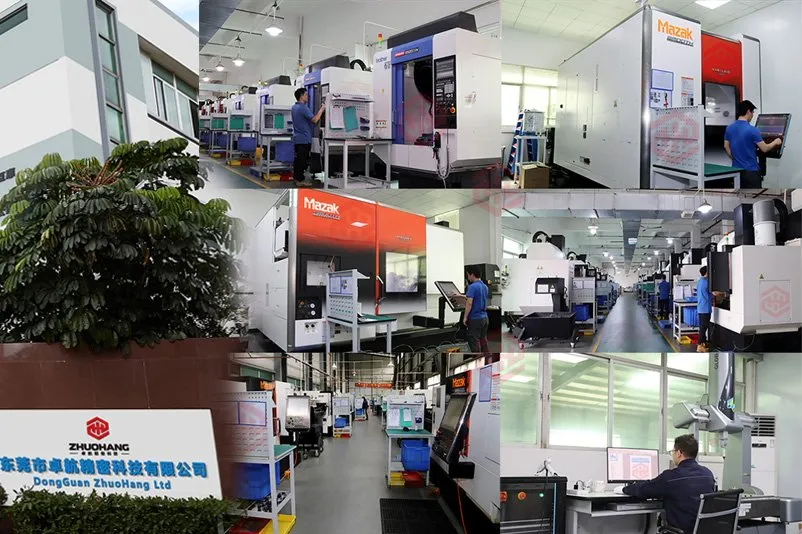
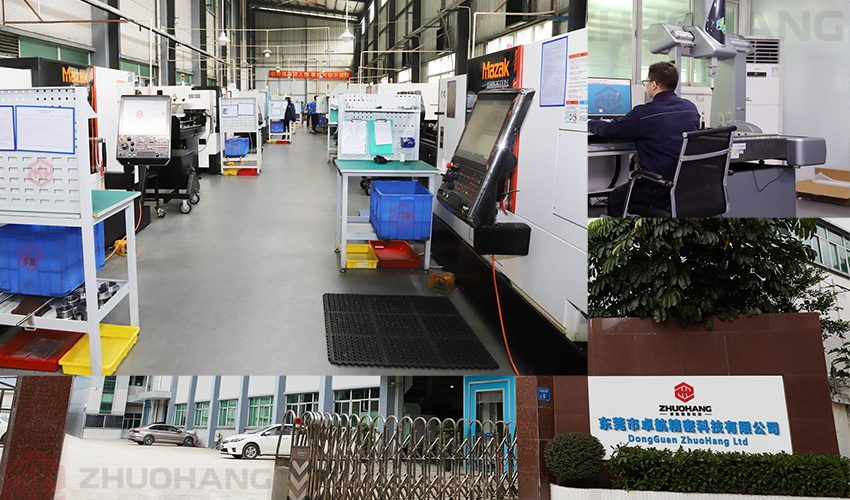
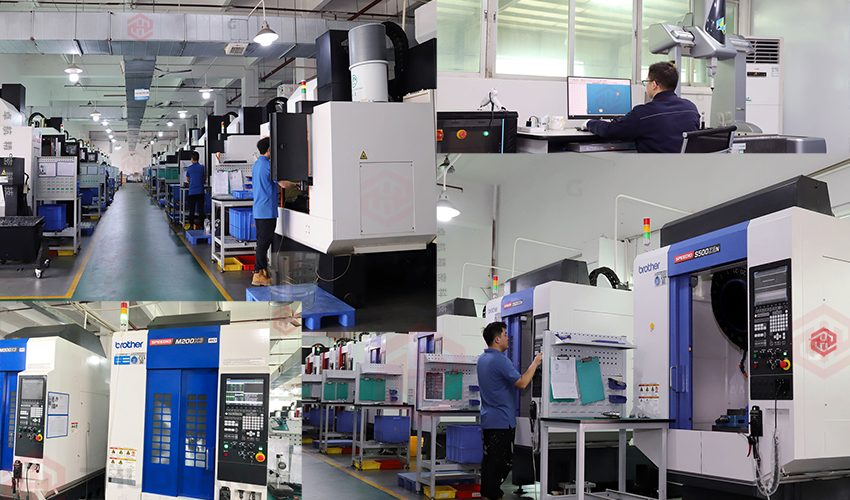
- Four core services — milling, turning, mill-turn, and grinding, run in-house on 100+ machines.
- ±0.003 mm milling and turning; ±0.002 mm grinding, verified on Hexagon CMMs.
- DFM rules per process — corner radii, depth-to-width, length-to-diameter, and wall thickness applied in the review.
- MOQ 1 piece, lead times of roughly 3 / 7 / 30 days depending on complexity.
- ISO 9001 · IATF 16949 (product design excluded) · ISO 14001 certified, build-to-print.
1. Which CNC machining services run in-house?
Every service here runs on our own floor rather than being brokered out, which is what keeps lead times short and accountability single. The four core processes cover most metal parts a buyer will ever specify.
| Service | Capacity | Held tolerance |
|---|---|---|
| 3-axis milling | 50+ centers | ±0.003 mm |
| 4-axis milling | 20+ centers | |
| 5-axis milling | 20+ centers | |
| CNC turning | 25+ lathes | ±0.003 mm |
| Mill-turn | Multi-task centers (Mazak / Brother class) | ±0.003 mm |
| Grinding | 7+ (surface / centerless / cylindrical) | ±0.002 mm |
The word "in-house" is doing more work here than it looks like. When milling, turning, and grinding all live under one roof, a part does not wait for a truck between operations, and accountability does not split across three vendors arguing about whose tolerance was the problem. The process range also means the DFM review has real options to work with: if a feature cannot hold at ±0.003 mm, the reviewer knows grinding is available and can hand the part off deliberately, not as a surprise after the first run.
2. How does DFM apply to CNC milling?
Milling is a rotating-tool process, and most of its design rules follow from that single fact. A cutter is round, so an internal corner cannot be square; a cutter deflects, so a deep, narrow pocket fights the tool.
- Corner radii. Specifying an internal radius equal to or larger than a standard end mill removes a second operation and cuts cost.
- Pocket depth. A pocket deeper than roughly three to four times the tool diameter needs long-reach tooling that vibrates and slows the feed; opening up the pocket or adding draft helps.
- Wall thickness. Thin walls deflect under the cutter, which degrades both finish and tolerance; a small increase in thickness stabilizes the part.
Applied before quoting, these rules decide whether a part runs cleanly on a 3-axis center or needs a 5-axis setup, and that decision is the single biggest cost lever in milling.
The axis count itself is a DFM decision, and it is easy to over-buy. A 3-axis center cuts from one orientation at a time and re-fixtures the part for each new face; a 4-axis adds rotation so several sides are reached in one setup; a 5-axis tilts the tool and the part together to reach compound angles without re-clamping. The rule is not "more axes is better." It is "use the fewest axes that reach all the critical features without re-fixturing." A 5-axis center costs more per hour, so a part that a 4-axis setup can finish in two orientations should not be quoted on 5-axis just because the machine is available. The DFM review makes that call against your geometry, not against the shop's machine list.
3. How does DFM apply to CNC turning?
Turning is a workpiece-rotation process, and its design rules follow from how a rotating part behaves. The two that matter most are length-to-diameter ratio and wall thickness.
- Length-to-diameter ratio. A long, thin shaft deflects away from the tool, so the lathe cannot hold tolerance without a steady rest or a smaller cut. Keeping unsupported length modest is the cheapest fix.
- Wall thickness. Thin-walled turned parts distort when the chuck clamps them, and the distortion shows up as out-of-round after release. A slightly thicker wall — or a fixture that distributes clamping — keeps the part round.
Turned parts hold ±0.003 mm, up to Ø720 × 1280 mm. When a feature genuinely needs tighter than that, grinding takes over at ±0.002 mm, and the DFM review is where that hand-off is decided.
The length-to-diameter ratio deserves a number, because it is the turning rule a buyer can check in seconds. As a rough guide, a turned part with an unsupported length more than about three to four times its diameter starts to need a steady rest or a tailstock center to stay straight under the tool. Below that, the chuck alone usually holds the part rigid enough for a clean cut at full feed. A drawing that quietly exceeds the ratio is a drawing that will machine slow or deflect out of round, and that is exactly the kind of flag the pre-quote review exists to raise before you pay for it.
4. When is mill-turn the right service instead of separate operations?
Mill-turn earns its place when a part has both turned and milled features that must be related to each other — a bore concentric with an outer diameter, a keyway timed to a thread, a cross-hole aligned to a face. Machining them in one setup on a mill-turn center removes the re-fixturing step entirely.
The payoff is not just fewer operations. When a part is re-clamped, every setup introduces a small alignment error that accumulates into dimensional variation. Cutting both feature types in a single clamping removes that error at the source, which is why mill-turn parts hold relationship tolerances that are awkward to hit with separate setups. It is also faster — fewer moves, fewer inspections, one accountable machine.
Mill-turn and 5-axis milling solve different problems, and confusing them costs money. Mill-turn is built around a turning spindle, so it is right for parts that are mostly round but carry milled features — flats, cross-holes, keyways — that must relate to the turned geometry. 5-axis milling is built around a rotating tool, so it is right for prismatic parts with compound-angle faces. A round part with a milled keyway is a mill-turn job; a housing with angled faces is a 5-axis job. The DFM review reads the dominant geometry first, then picks the machine, which is the opposite of forcing a part onto whatever machine is idle.
5. When does a part need grinding rather than milling or turning?
Grinding is the finishing step, not the bulk-removal step. You reach for it when a surface needs to be flatter, rounder, or smoother than a cutting tool can reliably deliver, or when the tolerance drops below the milling and turning band.
- Bearing seats and sealing faces where roundness and surface finish are functional.
- Dimensions at ±0.002 mm that milling and turning at ±0.003 mm cannot guarantee.
- Hardened surfaces machined after heat treatment, where grinding is often the only practical finishing method.
We run surface, centerless, and cylindrical grinding — 7+ machines — for exactly these cases. The DFM review decides whether a part needs grinding up front, rather than discovering it mid-run.
The three grinding methods are not interchangeable, and the difference is the geometry they hold. Surface grinding flattens a face and hits a precise thickness or flatness; it is the method for a sealing face or a locating pad. Cylindrical grinding holds an outside diameter round and straight, which is what a bearing journal needs. Centerless grinding grinds the outside diameter without centers, which is fast and accurate for long, slender parts that a chuck would distort. Picking the right one is a geometry decision made in the review, and getting it right is what lets the part ship at ±0.002 mm instead of fighting a tolerance it cannot hold.
6. How does the pre-quote review change the services you need?
The review is where a buyer actually saves money, because it often reduces the number of services a part requires. A corner radius might remove the need for EDM; a wall-thickness tweak might remove the need for a 5-axis setup; a tolerance relaxation might remove the need for grinding.
Every quote ships with this review, covering geometry, tolerances, material, and setup count, so you can compare not just prices, but the process plan behind them.
The review changes the service mix in one specific, repeatable way: it deletes operations, and every deleted operation removes both cost and a failure point. A corner radius deletes an EDM step. A wall-thickness tweak deletes a 5-axis setup. A tolerance relaxation deletes a grinding pass. When you look at it that way, the review is not an opinion about your drawing — it is an edit to your process plan, written before the process plan costs anything. That is why the feedback ships with the quote rather than as a separate, chargeable service.
7. How do the services map to lead time?
Lead time is set by the number of operations and process steps, not by a blanket promise. Fewer setups — the direct output of good DFM — move a part down the tier.
| Complexity | Approx. lead time | Typical profile |
|---|---|---|
| Simple | ~3 days | Few operations, single material, no finishing |
| Standard | ~7 days | Multiple operations, standard tolerances |
| Complex | ~30 days | 10–20 process steps, or surface finishing / heat treatment |
Complex parts can run 10–20 process steps, and any surface finishing pushes a part into the longer tier. Tell us your target date and we will tell you honestly whether it holds, not the other way around.
8. Which secondary operations can be bundled with the services?
Machining rarely finishes a part. We bundle the secondary operations that follow it, so you receive finished components rather than machined blanks, and one invoice for the whole chain.
- Surface finishing: standard and hard anodizing, zinc / nickel / silver / gold / chrome plating, powder coating, painting, brushing, mirror polishing.
- Heat treatment: vacuum, bright, carburizing, nitriding, and stress-relief aging. In-house ovens reach 500 °C; titanium stress relief above that is outsourced to a qualified partner.
- Deburring, tapping, laser marking, assembly: included as your print requires.
Secondary operations are where tolerances get quietly consumed if the order is not sequenced correctly. Anodizing and plating build a coating thickness on top of a machined dimension, and heat treatment can move a part by relieving residual stress. A shop that machines to final size and then plates the part ships something out of tolerance; a shop that plans the finishing into the dimension ships what the print asked for. That planning — machining undersized before plating, stress-relieving before the finish pass — is part of the DFM review, because a finish is only as good as the geometry it lands on.
9. Which process fits which part geometry?
A buyer who can map geometry to process reads a quote as a plan instead of a price. The map is simple because each process has a natural shape it handles best, and the DFM review is really just this map applied to your specific part.
| Part geometry | Recommended process | Why it fits |
|---|---|---|
| Prismatic — housings, plates, brackets | 3/4/5-axis milling | Flat faces, pockets, and holes cut by a rotating tool |
| Round — shafts, pins, bushings, flanges | CNC turning | Cylindrical features generated by workpiece rotation |
| Round with milled features, tightly related | Mill-turn | One setup keeps turned and milled geometry concentric |
| Precision surfaces — bearing seats, sealing faces | Grinding | Flatter, rounder, and smoother than a cutting tool can hold |
| Thin sheet or plate with bends | Not machined — sheet metal | Bending beats machining away material for flat parts |
The last row matters as much as the first four, because a good review sometimes tells you the part is not a machining job at all. A flat bracket with a few bends is cheaper in sheet metal than milled from a solid billet, and an honest shop says so even when it means less work for their own machines. That willingness to point a part away from machining is the difference between a process plan that serves the buyer and one that serves the shop's capacity.
10. What should a buyer verify about the services before ordering?
The services page of any supplier says what they want to sell; a buyer needs to verify what they can actually do. These checks separate a process list from a process capability, and they work on any shop — including this one.
- The tolerance is tied to the process, not the page. Ask which process holds which band, and where the hand-off from milling to grinding happens.
- The machine count matches the claim. "100+ machines" should come with a breakdown by axis and type; a vague number hides a thin floor.
- The secondary operations have owners. Ask whether anodizing and heat treatment run in-house or through a named partner, and whether that partner is qualified for your industry.
- The quote lists the process plan. A quote that states the number of setups and operations is auditable; a quote that states only a price is not.
Send a drawing and we will answer all four in writing before you commit, because a buyer who verifies the process is a buyer who never pays for a capability that was only ever a claim.
Frequently Asked Questions
Which CNC machining services do you provide?
We provide 3-axis, 4-axis, and 5-axis CNC milling, CNC turning, single-setup mill-turn, and precision grinding, plus deburring, tapping, laser marking, and assembly. Each service has its own design rules, and we apply them in a pre-quote review so the process matches the geometry.
How does DFM apply to CNC milling?
In milling, DFM is mostly about corner radii, pocket depth, and wall thickness. An end mill is round, so internal corners need a radius matching a standard tool; deep narrow pockets need long-reach tooling that deflects. Reviewing these before quoting removes setups and speeds the cut.
How does DFM apply to CNC turning?
In turning, DFM centers on length-to-diameter ratio and wall thickness. Long, thin shafts deflect under the tool, and thin-walled parts distort under clamping. Design rules keep the part stable on the spindle, which is what lets a lathe hold ±0.003 mm repeatably.
When is mill-turn the right service?
Mill-turn earns its place when a part has both turned and milled features that must be concentric or otherwise tightly related. Machining them in one setup removes the alignment error of re-fixturing and cuts a whole operation, which shortens lead time and improves accuracy on a single accountable machine.
What tolerances do your services hold?
±0.003 mm for milling and turning, and ±0.002 mm for precision grinding. We verify critical dimensions on Hexagon CMMs and hold process capability to Ppk ≥ 1.67 at the initial study on key characteristics and Cpk ≥ 1.33 on general characteristics. Capability is reported per characteristic: every report names the feature, its tolerance band, the sample size, the sigma method, and the study window. Any dimension we cannot reliably hold is flagged in the design review before cutting.
What is your minimum order quantity and lead time?
Our MOQ is 1 piece. Lead time runs roughly 3 days for simple parts, 7 days for standard multi-operation parts, and 30 days for complex parts with 10–20 process steps or surface finishing. Fewer setups in the design move a part down a tier.
Do you provide a design review with the quote?
Yes. Every quote includes a design-for-manufacturability review covering geometry, tolerances, material, and setup count. We flag internal corners, thin walls, deep pockets, and over-tight tolerances with the price, so you can adjust the design before committing.
How do I get a machining service quote?
Email your STEP, IGES, or 2D drawing to [email protected]. We return a design-for-manufacturability review and a quote, usually within one business day. For complex parts, include a 2D drawing with critical tolerances plus material and finish notes.
Get a DFM review with your machining quote.
Send your drawing to [email protected] or call +86 13126536955.