
You do not need to fly to Guangdong to separate a capable China machining services supplier from a decorated middleman. The evidence that matters — entity, capability, quality system, and honesty — is available from your desk if you look in the right order. This guide is a 30-minute screening method built for a buyer who has a part to quote and a list of candidate suppliers: five minutes defining what the part actually requires, ten minutes on the website and the entity behind it, ten minutes sending a benchmark RFQ, and five minutes scoring the replies. The output is a shortlist of two or three suppliers worth deeper verification, and a clear list of the red flags that would have ended the conversation early.
What should you decide about your own part before you look at a single supplier?
The first five minutes are the cheapest quality control you will get, because a supplier cannot be screened against a blank requirement. Write down the non-negotiables: the material grade with its condition, the tolerance callouts that control function, the surface finish and any treatment, the quantity and target date, and the documentation you need with the parts. The realistic reference points are simple — milling and turning hold fit and alignment features to ±0.003 mm, precision grinding reaches ±0.002 mm, and process capability of Cpk 1.67 or higher is the standard on key characteristics — so your list should name which features actually need the tight band and which do not.
Decide what "qualified" means for this particular part before you look at websites. A simple bracket for a prototype needs a shop that can machine it cleanly and ship it fast; a production part for an audited program needs certificates, inspection reports, and material traceability. The same screen will not serve both, and trying to screen every candidate against every possible requirement is how the 30-minute method becomes an all-day distraction. Fix the requirement set first, then filter suppliers against it — everything after this step is a comparison against that list.
Which supplier signals on a website are trustworthy, and which are decoration?
In the next ten minutes, read the website like an engineer auditing a quote, not like a shopper. The trustworthy signals are specific and internally consistent: real process pages that name the actual capability — materials list, tolerance band, quality system with certificate identifiers you could verify — plus concrete MOQ and lead-time statements, a physical address that matches the entity name, and engineering content that reads like someone who has cut metal rather than a sales page assembled from stock phrases. Those details are hard to fake well, and consistency between them is the first test.
The decoration is just as easy to recognize: superlatives with no numbers, a machine list with no models or years, a gallery of glossy parts with no context, and claims that change meaning depending on which page you are on. When a site says "aerospace-grade" on one page and "prototype to production" on another, ask which one is true in the RFQ. And remember what a website cannot prove: a certificate scan proves a piece of paper existed once, not that the quality system runs today, that is what the registrar check and the live video are for. The website's job is only to decide who earns a place in the RFQ round, not to certify anyone.
How do you verify a supplier actually machines what it claims?
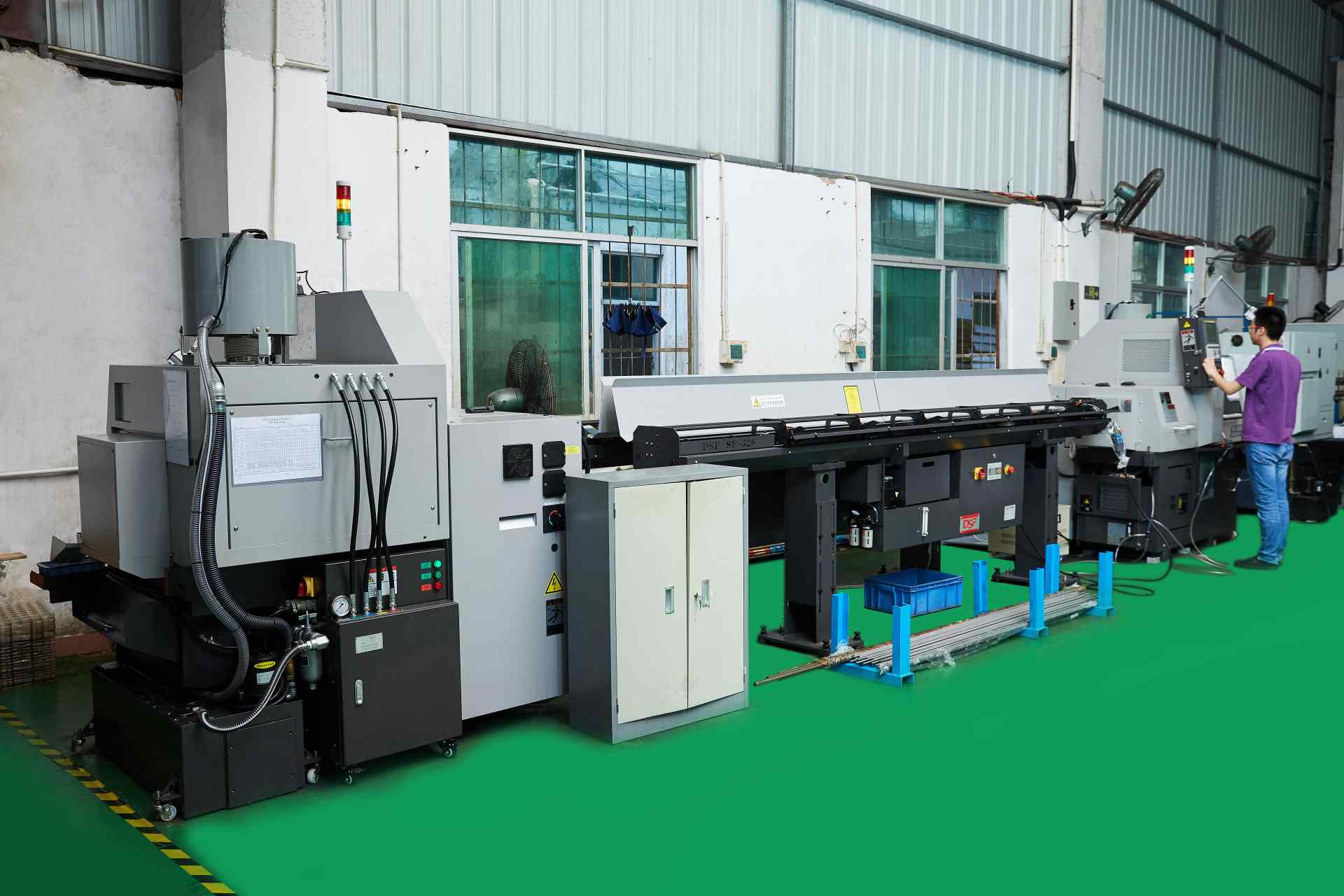
The fastest verification of machining capability is a live video walk-through, and the request itself is a test. A real shop shows the machine hall, the tool room, the inspection table, and a machine spindle close enough to read the model, usually within a day. A reseller deflects, offers a pre-recorded video, or changes the subject. Ask the person on the call to show a part similar to yours in the fixture — not a finished part on a shelf, a part being worked — and to name the CAM system and how they program the geometry. The answers are hard to rehearse and harder to fake.
Ask, too, for photographic evidence of work that resembles yours: parts with similar material, tolerance, or complexity, ideally with the drawing or program visible in the frame. Then check the entity behind the claims. The business license name should match the quote and the factory address; if the website belongs to a trading company, it should say so and name its factory. None of this is intrusive — a supplier that sells machining services for a living has all of it available — and the ones that provide it readily are telling you something about the audit they will pass later.
Which quality-system questions separate qualified shops from resellers?
Quality claims are only as good as their verification path. Ask which certifications the shop holds — for CNC machining services, a system such as ISO 9001:2015 is the common baseline, with IATF 16949:2016 (product design excluded) for automotive work and ISO 14001:2015 for environmental management — and ask for the certificate numbers so you can check them with the issuing registrar's public database. A certificate number that resolves cleanly is evidence; a scan with a blurry number is a decoration. Then ask what happens on the floor: is incoming material verified against its certificate, are critical dimensions inspected in-house on a CMM, are gages on a calibration schedule, and does the shop produce dimensional reports you can read?
The follow-up question matters most: ask for a redacted sample of a completed lot's paperwork. A qualified shop has a CMM report, a material certificate, and a packing list from a recent order it can show with customer names removed. A reseller has a folder of certificates it cannot connect to specific parts. The paperwork sample answers the question that actually decides your risk, not "do they have a quality manual" but "do they run quality as a habit." It takes five minutes to review and it will tell you more than an hour of conversation about process.
What should your 20-minute benchmark RFQ contain?
The benchmark RFQ is the same short package sent to every shortlisted candidate, and its purpose is to make the replies comparable. Send one real part — your actual part, not a generic sample — with the material grade, the quantity you genuinely intend to order, the tolerance callouts that matter, and the finish and treatment requirements. Ask every supplier the same three questions on top of the price: which features they would flag for a process change, what documentation ships with the lot, and what their lead time is at your quantity. Same package, same questions, same deadline, that is what makes the scoring fair.
Then read the replies for what they reveal, not just what they quote. Speed tells you how the shop treats inbound RFQs; a serious reply inside two business days with questions is better than an instant generic quote. The quality of the questions tells you whether the shop read your drawing: a question about a corner radius, a thin wall, or a tolerance band means it is engineering your part, while a reply with no questions has quoted it blind. The DFM notes are the single best signal in the whole process, because they show the shop is thinking about how to make your part well rather than how to win the price comparison.
How do you score the quotes when they arrive?
Score against your requirement list from the first five minutes, not against the other quotes. Weight the criteria by what this part actually needs — for a tolerance-critical part, the written confirmation of the ±0.003 mm band and the inspection plan outweighs a price difference; for a prototype, speed and communication may outweigh everything. A simple scoring table with four columns — requirement, weight, supplier A, supplier B — keeps the decision honest and records why you chose what you chose, which is useful when your own management or customer asks later.
Look at structure before price. A quote that itemizes material, machining, finishing, inspection, and freight, states the Incoterm, and confirms or flags each tolerance in writing is a quote you can compare. A lump-sum number with no breakdown and no confirmation is not cheaper — it is unknowable, and the difference will surface later as a surprise. Price the total delivered cost at your quantity, add the documentation you asked for to every candidate's response, and drop any supplier whose reply is evasive on tolerance, lead time, or scope. The two or three that survive this scoring are the ones worth the deeper verification — registrar checks, a video audit, and a reference call.
Which red flags should end the conversation immediately?
Some signals are worth a question; others should end the conversation on the spot. Full prepayment on a first order is one — the standard structure is a deposit with the balance against shipping documents or a passed inspection, and a supplier that demands everything up front is asking you to absorb all the risk. Unverifiable certificates are another: a quality claim whose number cannot be checked with the registrar is not a claim, it is a risk. Evasiveness on the live video, a refusal to name the factory behind a trading company, and a business license that does not match the quoted entity all belong in the same category.
Add to the list the behavioral red flags: urgency pressure ("the price is only valid today"), a generic quote with no reference to your drawing, price changes between email and formal quotation, and a supplier that agrees to every tolerance without a question. None of these is proof of fraud on its own, but each one is a cost you will pay later — in inspection, in scrap, or in a dispute. The 30-minute method is designed to surface them while the only thing at stake is an email, not a purchase order.
What should you verify before the first production order, even after a clean screen?
The online screen qualifies a supplier for a conversation; the first order qualifies it for a relationship. Before committing volume, run the final checks that no website can replace. Confirm the certificates with the registrar by number, and run a structured video audit of the machine hall and inspection room if you have not already. Place a small first order of the real production part — enough to produce a first article, not enough to hurt — and require the first-article inspection report, the material certificate, and the CMM data on your key characteristics before you release the balance. Agree the payment milestone and the inspection gate in the same document as the price, so commercial and quality terms cannot drift apart.
That first order is a paid qualification run. It tells you how the shop communicates under a real deadline, whether the parts meet the report, and whether the paperwork is clean enough for your own customer. When it arrives, check it: re-measure a critical feature, read the certificate against the drawing, and compare the packing list to the invoice. The supplier that survives that test cleanly has earned the volume order; the one that does not has cost you a small lot instead of a large one, which is exactly the trade the 30-minute method is designed to make. The quality page shows how inspection, documentation, and certification are handled on this site, the factory page covers what an audit or visit would see, and the FAQs answer the quoting, payment, and shipping questions that come up at this stage.
Frequently Asked Questions
How long does a proper online supplier screen really take?
Thirty focused minutes is enough to cut a long list to two or three candidates worth an RFQ: five minutes on your must-haves, ten on the website and entity check, ten sending a benchmark RFQ, and five scoring the replies. In-depth verification — registrar checks, a video audit, a reference call — happens after the shortlist, not before it.
Can I trust reviews on B2B marketplaces?
Use them as a traffic signal, not evidence. A review confirms transactions happened that platform users reported on; it does not tell you whether tolerances were met or paperwork was clean. Verify the underlying claims — certificates with the registrar, a live video walk-through, a sample RFQ — before you trust the star rating.
What is the minimum information to send for a comparable quote?
A 3D model or 2D drawing, the material grade with condition, finish and treatment, quantity and target date, and the tolerance callouts that matter. The same package to every candidate is what makes quotes comparable. A supplier that asks sharp questions about the package is screening you back, which is a good sign.
Should the first order be small?
Yes. A small first order of the real production design qualifies the supplier's process, inspection, and paperwork without risking a large prepayment, and it produces the first-article evidence future orders are measured against. Treat it as a paid qualification run, not a negotiation.
What if the supplier turns out to be a trading company?
A trading company is not automatically a dead end — many manage excellent factory relationships and export documentation. The condition is transparency: it should name the factory, allow a video audit of that factory, and put its quality responsibility in the contract. A trader that hides the factory is the risk, not the trading model.
Do I need to visit China before placing an order?
Not for the first order. A structured video audit, verified certificates, a clean sample RFQ, and a pre-shipment inspection provide the evidence at a fraction of the travel cost. Save the in-person visit for the point where the program is large enough that the visit is part of your own quality record.
What payment terms protect a first order?
A deposit in the region of 30 percent against the signed purchase order, with the balance released against shipping documents or a passed pre-shipment inspection, is the standard defensible structure. Full prepayment is a red flag. A letter of credit at sight is the alternative when the value justifies the banking cost.
Run the 30-minute screen on us, and on any supplier you are comparing.
Email [email protected] or call +86 13126536955 and ask for the video walk-through, the certificate numbers, and a sample lot's paperwork.