
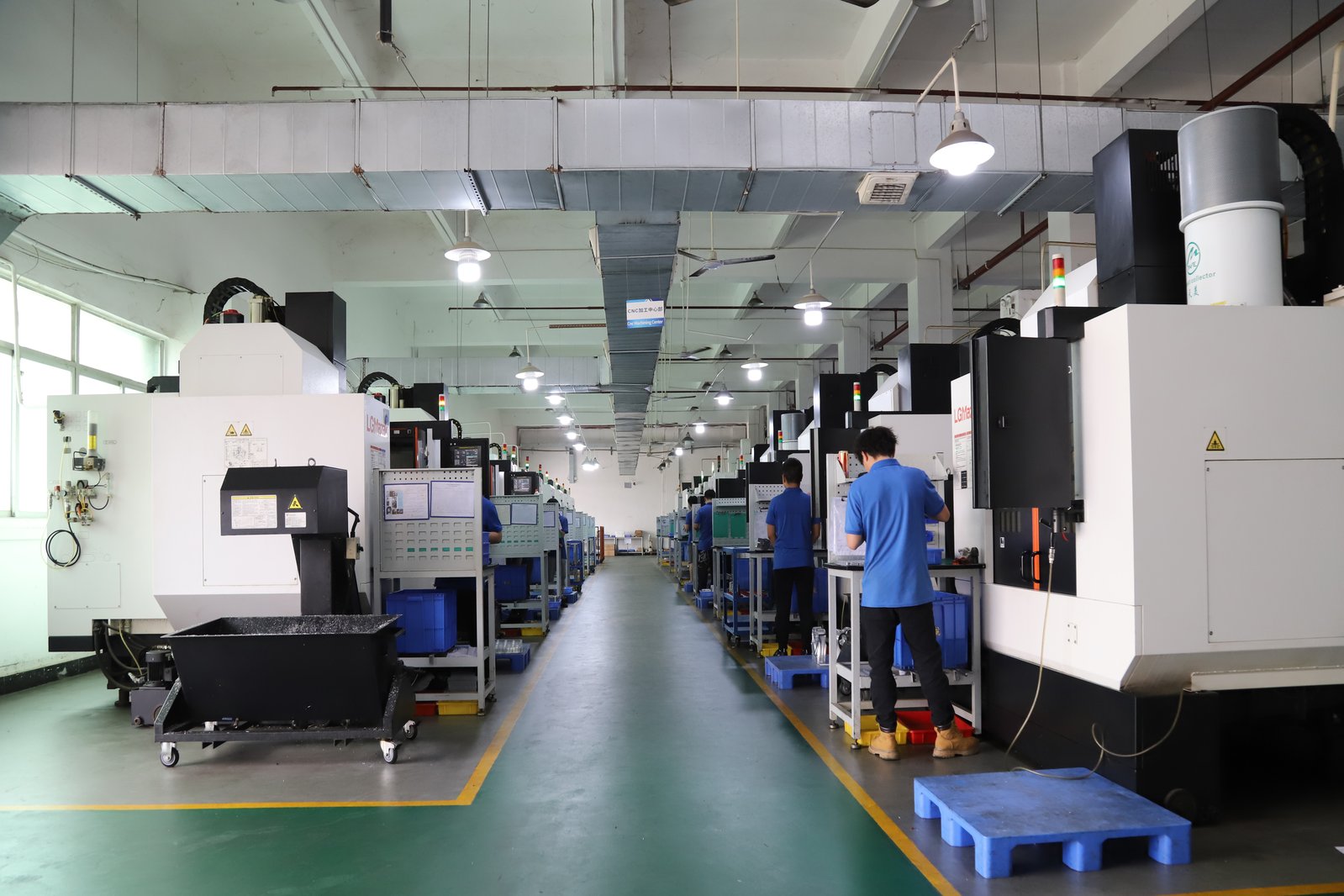
Ordering machining services from China concentrates most of the risk in one decision: the moment you commit volume to a supplier. Everything before that — the quote comparison, the DFM review, the certificate check, the traceability audit, the first article — exists to make that decision cheap and reversible. This guide walks through what to verify before the order: the checks that remove the unknowns, how to read a quote so it can be scored, what the purchase order should specify, and how the first-article gate protects the batch.
Why does the pre-order moment carry most of the sourcing risk?
Once an order is placed, most of the leverage moves to the supplier. The drawing is released, the deposit is paid, the material is bought, and the calendar is committed — reversing any of it costs money, time, or both. Before the order, every unknown is still a question rather than a problem: the quote can be compared, the certificate can be checked, the traceability system can be audited, and one part can be ordered to validate the process.
That is why sourcing discipline is really a sequence of gates, each cheaper than the one it protects. The gate before a production order is the first-article gate: one part at a 1-piece MOQ, measured against the drawing, with the documentation reviewed. If the first article passes, the production lot is released against a proven baseline; if it fails, you have learned the lesson for the price of one part rather than one batch.
The broader screen that picks the shortlist in the first place is covered in the supplier selection guide. This guide assumes you have a candidate and runs the verification before you release the order.
First, verify the entity, the certificates, and the floor
Everything else depends on the legal entity, because certificates, contracts, and customs paperwork all key off the registered name. Check that the entity on the quote matches the entity on the certificates and the payment details, and verify the certificate numbers with the registrar rather than accepting the logos. ISO 9001:2015, IATF 16949:2016, and ISO 14001:2015 each carry a registrar reference, and a lookup confirms the certificate is current, in the correct name, and scoped to what the supplier claims.
Read the scope line as carefully as the standard itself. A scope that excludes product design confirms the shop is build-to-print, which is the arrangement most buyers want when they send released drawings — the design responsibility stays with you, where it belongs. A scope that does not match the supplier's claims is a finding, not a detail.
Then confirm the floor is real. A manufacturer can name its machine models and counts and walk you through them on a live video call; a trading desk recycles brochures. The entity, the certificates, and the floor together establish that the company quoting you is the company that will machine your parts.
Second, read the quote as lines, and read the DFM review
A single-figure quote cannot be compared or scored, because it hides where the scope differs. The quote you want is broken into lines you can hold the supplier to: material grade and stock, tolerance per critical feature, finish, setup or tooling, lead time, and inspection documentation. Comparable quotes are the only ones you can score, and the breakdown is what tells you whether one supplier's low number is a real efficiency or a missing line.
On machining services, the DFM review that travels with the quote is as important as the price. A service that flags internal corners, thin walls, deep pockets, and over-tight tolerances before you order has read your drawing and is proposing the smallest change that removes cost or risk; a quote with no engineering comment has not thought about your part. The DFM pass is the cheapest sample of the working relationship you will get, and the review is advice rather than a requirement — you decide which suggestions to take.
Ask for the review to state what drives the price on your specific part. A supplier that tells you which features cost money without adding function is doing the engineering; one that returns a number with no questions is quoting your drawing instead of planning it. Send the same file package — model, toleranced drawing, material, finish, quantity, and incoterm — to every shortlisted service so the lines come back comparable.
Third, verify the traceability system and the material check
Traceability is what turns a claim into a record, and on a machining service it should be a system, not a folder. Ask to see the record on a real lot: raw material source, process parameters, machine data, batch, and operator. A supplier whose production system logs each lot and can pull the chain on demand is running real traceability; one that hesitates has a gap somewhere, and a gap is harder to close after your parts are in the chain.
Material identity is the cheapest thing to verify and the most expensive to get wrong, because a substituted alloy is invisible to the eye. Confirm that incoming lots are checked against the mill certificate before cutting — XRF spectroscopy is the standard method and catches a mixed or mislabeled grade at the door — and that material certificates ship with the parts. State the grade on the drawing so the certificate is matched to the callout; "aluminum" is not a specification, while "7075-T6 per the drawing note" is, because the certificate names the temper and the heat.
Ask whether the verification record for your lot can be included with the certificates. The chain — mill certificate, incoming check, production record, shipped reports — is what lets your quality system trace a non-conformance to a specific batch, and it is exactly the record an audit reconstructs months later.
Fourth, confirm the documentation the service can actually produce
On regulated and automotive work, the documentation is the deliverable, and it should be scoped at quote time rather than requested after machining. A China machining service should be able to ship CMM dimensional reports, SPC charts, and material certificates with the parts, and for automotive and regulated programs to run PPAP and FAI packages, including control plans and PFMEA, on request. Ask which of these are standard and which are priced per program, so there are no surprises when your quality team asks for the evidence.
Confirm the format as well. Dimensional data that is machine-readable is far easier for your team to load and audit than a scan, so ask whether reports can be provided in a form your systems accept. On a regulated order, this is a small question with a large consequence for how smoothly the record assembles.
The inspection and reporting standards a China machining service verifies are detailed in the quality and measurement guide, and the realistic tolerance and finish envelope is in the tolerances and surface finishes guide.
Fifth, protect the drawing before it goes out
Drawing protection is a due-diligence check, not a formality, and it should be settled before sensitive files move. Confirm the supplier's handling: drawings and models should not be shared without written permission, an NDA should be signed and returned if you provide one, and data should be access-controlled. A supplier that answers these questions directly is one that treats your IP as an asset; one that is vague has not thought about it.
Send proprietary drawings only after the earlier gates pass. The shortlist can be evaluated with a non-sensitive part that exercises the same materials, tolerances, and finishes; the production drawing goes out when the entity, the certificates, and the sample order have all checked out. Each gate is cheap, and the failure they prevent — a proprietary design sitting with an unqualified supplier — is not.
Agree the handling of the drawing in the purchase order as well: which revisions are released, who owns the file, and what happens to the tooling and programs if the relationship ends. On machining services the CAM program and the fixture are part of the asset you are paying for, and their disposition belongs in the terms.
What should the purchase order actually specify?
The purchase order is the contract between the verified supplier and your requirements, so it should carry everything the quote carried and more:
- The released drawing and revision — the exact file the supplier is obligated to build, so a later change is a formal revision, not an interpretation.
- Material grade and specification — matched to the callout on the drawing and to the certificate that must ship with the lot.
- Tolerance and finish callouts — the critical features, the Ra values, and the finishing chain.
- Quantity, incoterm, and lead time — including the machining date and the shipping leg as separate commitments.
- The documentation scope — dimensional report, material certificates, SPC data, and who receives them.
- The first-article approval step — the gate that releases the batch only after the first part is approved.
Consider payment milestones as part of the PO as well. A deposit tied to material and a balance against inspection or shipment ties your money to documented progress rather than to promises, and on a first production order it keeps the risk on the side that can control it. A purchase order that specifies these is one you can hold the supplier to.
How does the first-article gate protect the batch?
The first-article gate is the verification that turns everything before it into a release decision. Order one part at the 1-piece MOQ, measure it against the drawing, and review the documentation. Only when the first article passes do you release volume, and the production lot is then judged against the approved baseline rather than against a fresh interpretation of the drawing.
That baseline is why keeping the same machining service through scale-up matters. The first machined part becomes the measurement baseline, and the production lot is judged against it, with the program and inspection plan carrying over. A reorder starts from the first run's baseline instead of a cold start, which removes the re-qualification step from every subsequent order. Lead times for the release follow the 3 / 7 / 30-day ladder by process-step count, with the first-article date set by the complexity of the part.
Release volume in stages rather than all at once where the stakes are high. Approve the prototype's material file and dimensional report, then run a pilot batch carrying its own first-article report and SPC data on the critical characteristics before full volume. Each stage is a smaller bet than the one after it, and each one confirms the process is still in control.
How do you manage the machining service after the first order?
The relationship is maintained by the same evidence that qualified it. Judge every production lot against the approved baseline, require per-lot inspection and documentation, and agree the re-order process so a repeat order moves without re-qualification. The paperwork should not weaken as the relationship ages.
Re-verify on a schedule, not only on events. Confirm the certificates are still current with the registrar each year, re-check the material process when the supplier changes a source, and require notification of process changes that could affect your part. A supplier that treats the evidence as a standing requirement is one whose quality you can continue to rely on.
And keep the escalation path short. Agree in advance what happens if a lot arrives out of spec — the remake policy, who covers the freight, and how the root cause is isolated. On machining services the non-conformance process is part of the product, and it is cheaper to agree it before you need it. The commercial side of the order you have now verified is worked through in the China machining services cost guide.
Frequently Asked Questions
What should I verify before ordering machining services from China?
Verify five things: the legal entity and certificate numbers with the registrar, the quote lines including the DFM review, the traceability system, the material check process, and the first-article gate that releases the batch. Each removes an unknown before money and drawings move.
Why is the DFM review a sourcing signal, not just a courtesy?
Because the engineering in the response shows how the supplier will treat your part in production. A review that flags internal corners, thin walls, deep pockets, and over-tight tolerances has read your drawing; a quote with no comment has not. The DFM pass is the cheapest sample of the working relationship.
What certificates should a machining service in China hold?
Require ISO 9001:2015, IATF 16949:2016, and ISO 14001:2015 with verifiable numbers issued to the same legal entity, and check the numbers with the registrar. Read the scope line too: a scope excluding product design confirms a build-to-print supplier.
How do I verify the traceability system before a run?
Ask to see the record on a real lot: raw material source, process parameters, machine data, batch, and operator. A supplier whose production system logs each lot and can pull the chain on demand is running real traceability; one that hesitates has a gap somewhere.
When would I need PPAP or FAI documentation from a China machining service?
For automotive and regulated work, PPAP and FAI packages — control plans, PFMEA, and first-article evidence — are the documentation language your quality team reads. Ask at quote time whether the supplier can produce them, and scope them into the order.
How do I validate before committing to volume?
Order one part at the MOQ of 1 piece, measure it against the drawing, and review the documentation. Only when the first article passes do you release volume — a first-article gate is the cheapest insurance against a bad batch.
What should the purchase order specify?
The released drawing and revision, the material grade and specification, tolerance and finish callouts, quantity and incoterm, the documentation scope, the lead time, and the first-article approval step that gates the batch. A PO that specifies these is one you can hold the supplier to.
How do I manage the supplier after the first order?
Judge every production lot against the approved first-article baseline, require per-lot inspection and documentation, agree a re-order process, and re-verify certificates and material checks on a schedule. The relationship is maintained by the same evidence that qualified it.
Ready to run the verification on an order?
Email the drawing, the material callout, and the quantity to [email protected] or call +86 13126536955. You will get the due-diligence evidence in writing, an itemized quote with a DFM review, and a first-article gate you can approve before volume moves.